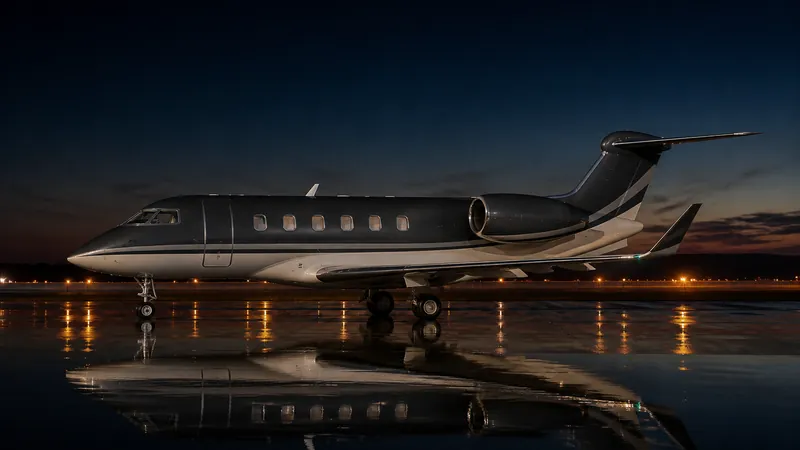
The Challenger 350: what its cabin and range cover, and the 3500 that followed
Bombardier now builds the Challenger 3500, which entered service in September 2022, and its old Challenger 350 web page redirects there. The two share the same cabin, and many 350s fly in charter fleets. Most quotes in this class will offer one or the other.
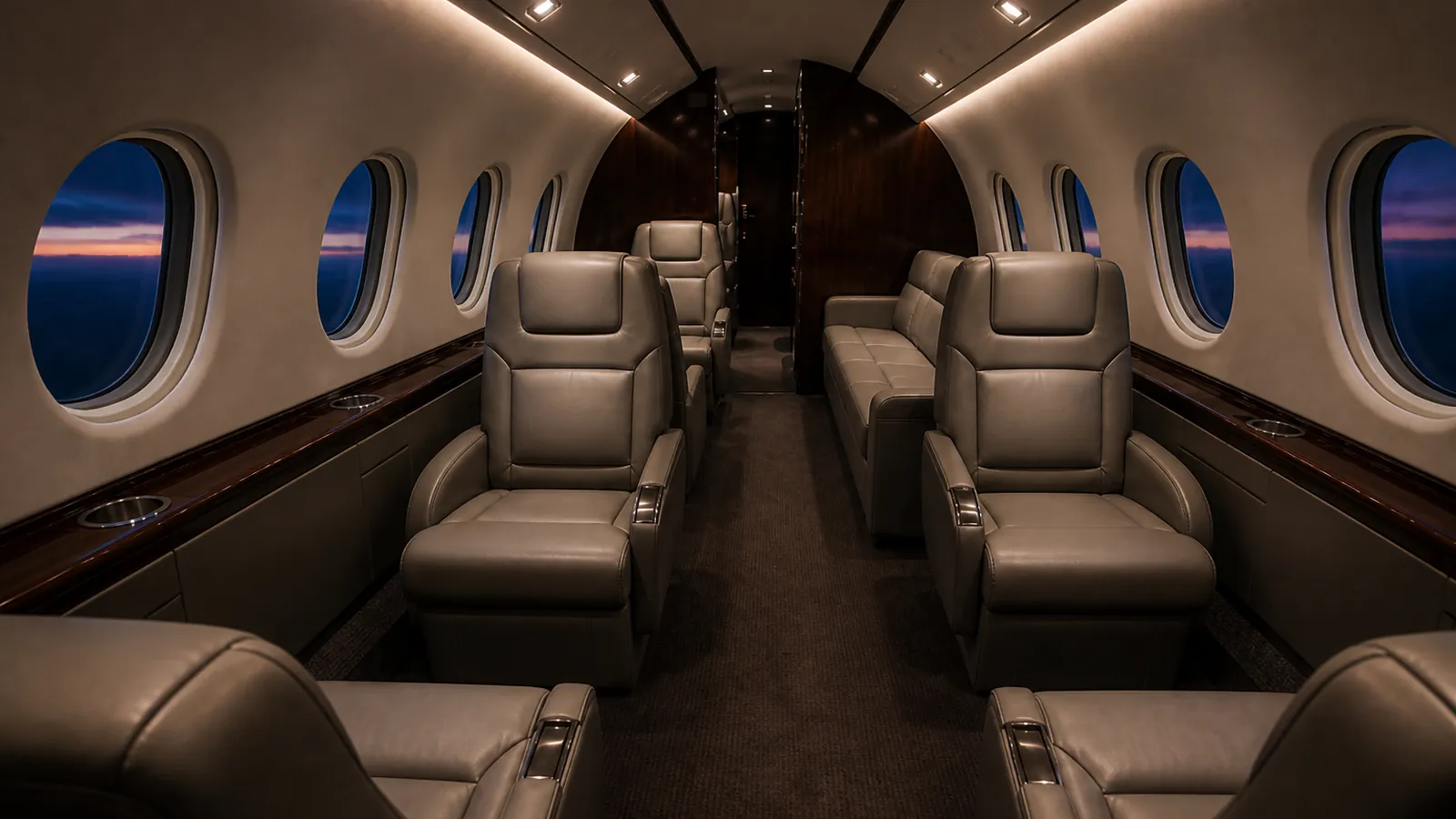
Inside the Challenger 350
The cabin is 7.68 m from the cockpit divider to the rear, 2.19 m wide and 1.83 m high, with a flat floor throughout. Bombardier markets it for up to ten passengers. The baggage compartment holds 3 m³ and stays reachable in flight, so a bag left in the hold is not lost until landing.
Challenger 350 range and runway
With eight passengers, two crew and standard reserves, the 350 flies 3,200 nm. Take-off at full weight needs about 1,474 m at sea level, and landing about 721 m. That opens shorter regional runways that larger jets cannot use.
Which of our routes the Challenger 350 suits
The Challenger 350 suits Lagos to London at 2,691 nm with room to spare. London to Dubai, at about 2,978 nm, is within its range with a full cabin but leaves little margin for strong headwinds in winter. We check the forecast before confirming it nonstop.
For shorter European trips such as London to Mykonos, it is more aircraft than needed, but welcome when the party is large.
The Challenger 350 against its class siblings
The Praetor 600 has more range and a lower cabin altitude. The Citation Longitude has a longer cabin. Because so many 350s and 3500s fly in Europe, one is often positioned near your departure airport, which can save a positioning leg.