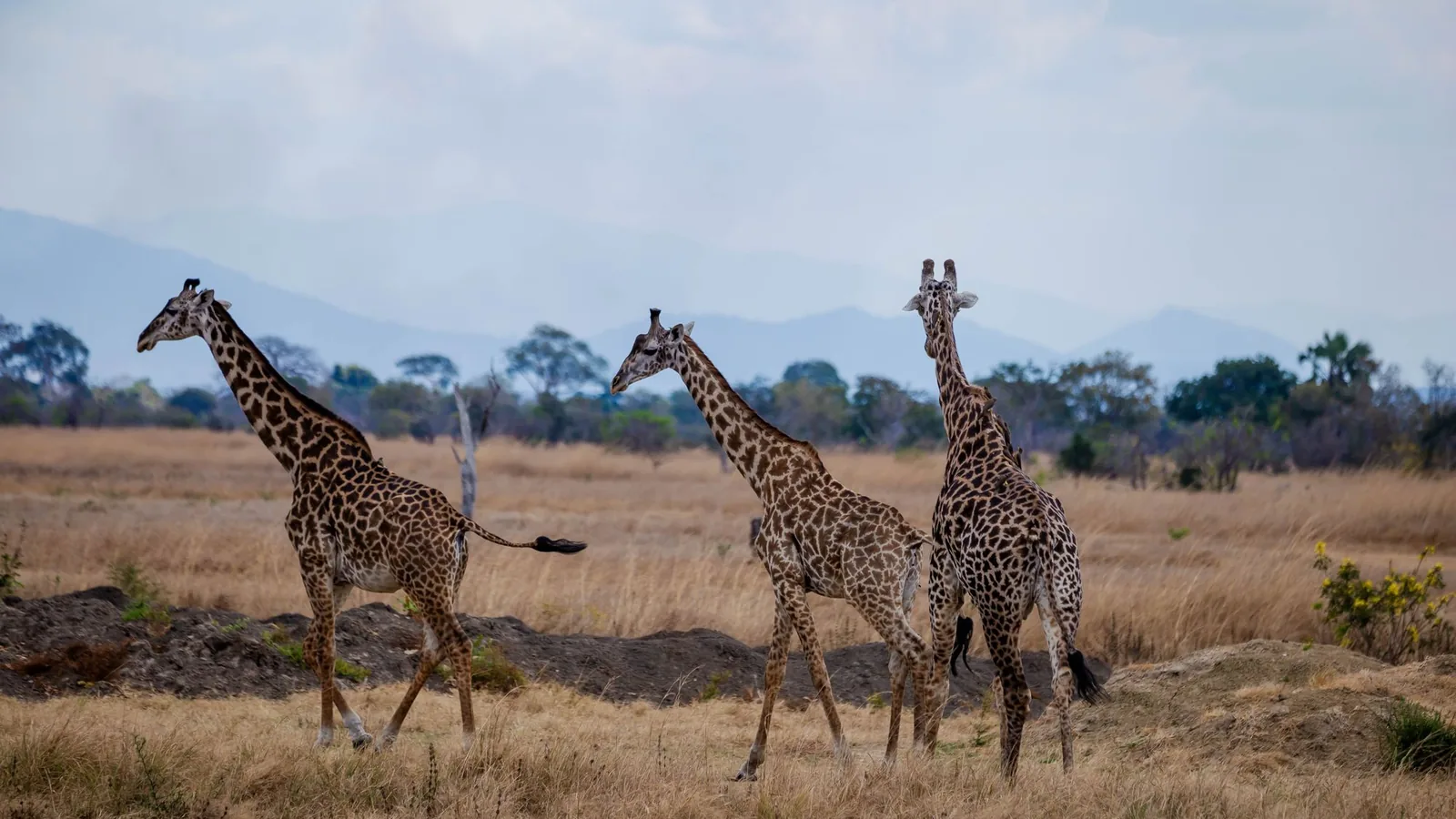
South Africa
For game viewing in the Kruger area and the private reserves beside it, the drier months from May to September are usually considered best: the vegetation is thinner and animals use the rivers. Cape Town is a different season, with the best weather generally from December to March. A South African safari is also the easiest to combine with the coast and the winelands.
Zambia
South Luangwa is best from July to October, when the park is at its driest and the days are warm. Wildlife viewing becomes harder in the green season from December to April, although parts of the park remain open. Zambia is known for walking safaris, and it pairs with Victoria Falls.
Madagascar
Madagascar is wildlife of a different kind: lemurs, baobabs and beaches rather than the big five. The dry season, roughly April or May to October, is the best window, with lemurs active and roads passable. The wet season runs roughly November to March, with cyclone risk, especially in the north-east, and some lodges close.
Kenya
Kenya can be visited year-round. The long rains fall from about April to June and the short rains in October and November. July to October is the busiest and most expensive period, as the Great Migration reaches the Maasai Mara.
Tanzania
Tanzania is also good year-round. January to March suits the calving season in the southern Serengeti, May to July brings the first river crossings, and June to October is the main dry season. Peak months are busier and costlier.
Families and age policies
South Africa is the easiest first safari for families, with short domestic flights and malaria-free private reserves. Zambia, Kenya and Tanzania are rewarding with older children, because camps are further apart and age policies for game drives vary from camp to camp. We ask each lodge for its child policy in writing before we suggest it.
Malaria: what the official sources say
Start with the official health sources, and do it weeks before you travel. The CDC lists malaria transmission across the whole of Zambia, and recommends preventive medicine. For Kenya it lists transmission below 2,500 m, including the game parks, with cases rare in the densely urbanised centre of Nairobi, and for Tanzania all areas below 1,800 m. In South Africa the risk is limited to Kruger and the northern lowlands, and South Africa Tourism names Madikwe, Pilanesberg, the Waterberg and private reserves in the Eastern, Western and Northern Cape as malaria-free. NHS Fit for Travel and TravelHealthPro are the UK sources for children's advice and dosing, and the choice of tablet depends on destination, age and weight, so see a travel-health professional. GOV.UK also lists malaria among the health risks in Madagascar.
Private reserve or national park
National parks such as Kruger are large and rule-bound: vehicles keep to roads and game drives follow park hours. Private reserves, some of which share unfenced boundaries with the parks, run their own guided drives, usually allow off-road driving to follow an animal, and often offer night drives and walks. For a first safari, a private reserve with a good guide usually gives the better experience, at a higher cost.
Combining countries and adding a beach
The most common pairing is a bush week followed by a beach: South Africa with the Cape, Zambia with Victoria Falls, Madagascar with an island such as Nosy Be. Put the bush first and the beach last, so you finish on a rest. Kenya and Tanzania are often paired with the Indian Ocean coast; check the malaria advice for the coast separately, because the risk differs from the highlands. Mixing countries means several flights, so consider a private charter for short bush hops, and make sure the season suits both halves of the trip. For an island stay to follow the bush, see private islands for exclusive use.
For East Africa, our Kenya and Tanzania guide covers the Mara, the Serengeti and flying-doctor cover. For a worked example, read our family safari guide for South Africa, Zambia and Madagascar in 2027, and see private jet charter and our lifestyle management service. If you would rather end on an island, see our private islands page, or a week on a yacht charter.
How long to go
Allow three nights at a single camp as a minimum and four or five if you can, with a second camp in a different habitat for variety. A two-week trip might be eight nights in the bush and five on the coast. Add a night either side for international flights and domestic connections.
How early to book
The small camps with the best positions are limited, and the dry season is the busy one. For July to October 2027, and for short bush hops by private charter, start in the next few months, and as early as possible for school holidays. Flexible dates open up far more choice.
How we plan it
We plan itineraries around the month you can travel, the group and the pace you want. Pricing is quoted for your dates; we do not publish rates on this page.